
Let’s be real. Plastic manufacturing is becoming pricier each year. The prices of raw materials are increasing and the competition is becoming more intense, resulting in reduced profit margins. In such a situation, every manufacturer looks for one thing only – cost control without quality loss. And this is exactly where Filler Masterbatch for Cost Reduction becomes a total game changer.
This blog is written in a relaxed, easy style. No boring lectures. No heavy technical language. Just honest information that actually helps.
So let’s dive in.
What is Filler Masterbatch?
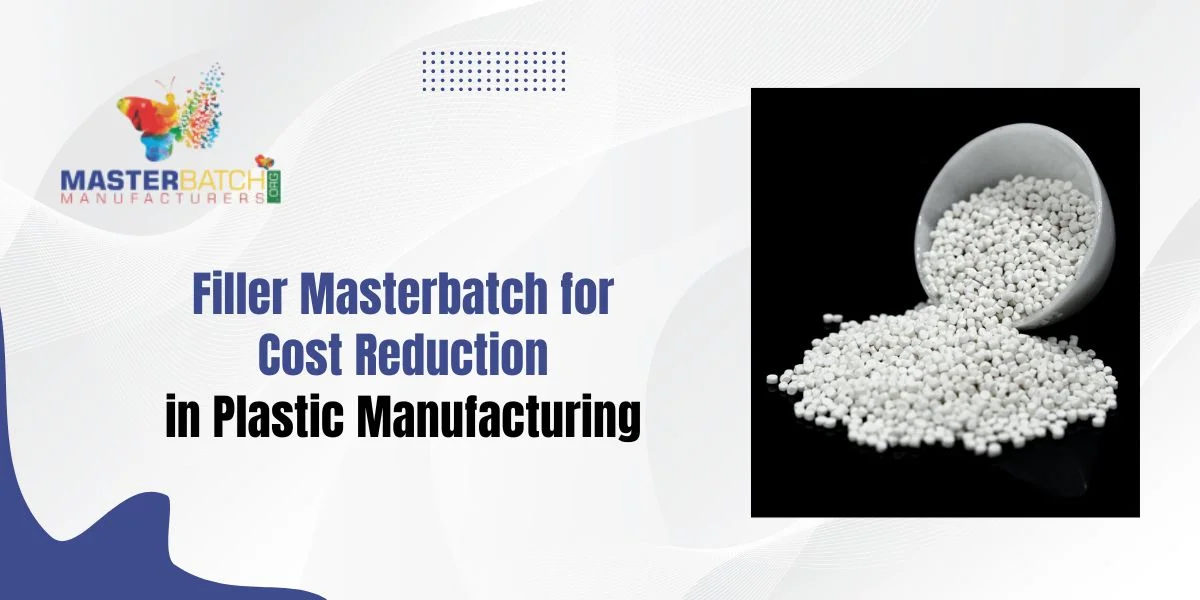
Simply explained, filler masterbatch is a mix of calcium carbonate and a polymer carrier. Manufacturers add it to plastic during processing to reduce raw material cost.
But let’s be honest. Filler Masterbatch for Cost Reduction is not just about saving money.
It also helps with:
- Better stiffness
- Improved surface finish
- Smooth processing
- Higher production output
That’s why more and more industries are shifting toward Filler Masterbatches for Cost Reduction.
Why Cost Reduction Matters So Much in Plastic Manufacturing?
Frankly speaking, plastic manufacturing runs on tight margins. Even a small saving per kg can make a huge difference at the end of the month.
Using Filler Masterbatch for Cost Reduction helps manufacturers:
- Reduce virgin polymer usage
- Control production expenses
- Stay competitive in pricing
- Improve overall profitability
In fact, many businesses survive market pressure only because of smart filler usage.
How Filler Masterbatch for Cost Reduction Works?
Let’s keep this simple. Instead of using 100% pure polymer, manufacturers replace a part of it with filler masterbatch. Since filler masterbatch is cheaper than virgin plastic, overall cost comes down.
Here’s what happens:
- Polymer consumption reduces
- Material cost drops
- Processing remains stable
- Product quality stays acceptable
That’s why Filler Masterbatch for Cost Reduction is widely used across industries.
Manufacturing Process in Easy Words
No technical headache here.
The process of making Filler Masterbatch for Cost Reduction usually includes:
- High-quality calcium carbonate selection
- Polymer carrier like PE or PP
- Proper mixing and compounding
- Controlled heating and extrusion
- Cutting into uniform granules
The real difference comes from formulation and dispersion quality.
Applications of Filler Masterbatch for Cost Reduction
Honestly, filler masterbatch is everywhere. You just don’t notice it.
Common applications include:
- Plastic carry bags
- Packaging films
- Woven sacks
- Injection molded products
- Blow molded containers
- Household plastic items
- Sheets and profiles
In all these products, Filler Masterbatches for Cost Reduction helps manufacturers stay profitable.
Benefits of Using Filler Masterbatch for Cost Reduction
Let’s be honest. If it didn’t give benefits, no one would use it.
Here’s why manufacturers love Filler Masterbatch for Cost Reduction:
- Significant raw material savings
- Better stiffness and strength
- Smooth processing on machines
- Higher production speed
- Reduced shrinkage
By the way, when used correctly, it does not harm product performance.
How Much Filler Masterbatch Should Be Used?
This depends on the product and application.
Generally:
- Films use lower percentage
- Injection molding can use higher percentage
- Non-critical products allow more filler
The key is balance. Smart use of Filler Masterbatches for Cost Reduction saves money without hurting quality.
Common Myths About Filler Masterbatch
Let’s clear some confusion.
Many people believe filler masterbatch:
- Always reduces quality
- Makes products weak
- Causes machine issues
Frankly speaking, these problems happen only when low-quality material is used. A good Filler Masterbatch for Cost Reduction actually improves processing stability.
How to Choose the Right Filler Masterbatch Supplier?
This part is very important.
Before buying Filler Masterbatches for Cost Reduction, always check:
- Calcium carbonate purity
- Particle size consistency
- Dispersion quality
- Polymer compatibility
- Technical support from supplier
Let’s be honest. Cheap material with poor quality can increase rejection and losses.
Mistakes Manufacturers Should Avoid
These mistakes cost real money.
Avoid:
- Using filler without testing
- Overloading filler percentage
- Ignoring product application
- Buying only based on price
Smart use of Filler Masterbatch for Cost Reduction always follows testing and proper guidance.
Why Filler Masterbatch is a Long-Term Solution?
In fact, filler masterbatch is not a shortcut. It’s a long-term strategy.
It helps manufacturers:
- Stay competitive
- Manage raw material fluctuations
- Increase profit margins
- Scale production easily
That’s why demand for Filler Masterbatches for Cost Reduction keeps growing year after year.
Final Thoughts
To put it succinctly, Filler Masterbatch for Cost Reduction is one of the most ingenious materials in plastic manufacturing today, when applied correctly it reduces cost, enhances efficiency, and controls quality.
Let’s be frank. In today’s market, surviving without cost optimization is tough. And filler masterbatch makes that journey much easier.
Follow us on Facebook for the latest updates, tips, and special offers!
FAQs
1. What is the main material in filler masterbatch?
Calcium carbonate is the main filler material.
2. Does filler masterbatch reduce plastic quality?
No, when used correctly, quality remains stable.
3. Can filler masterbatch be used in food packaging?
Only food-grade filler masterbatch should be used.
4. How much filler masterbatch is normally added?
It depends on the application, usually between 5% to 50%.
5. Is filler masterbatch suitable for all plastics?
It works best with PE and PP-based products.