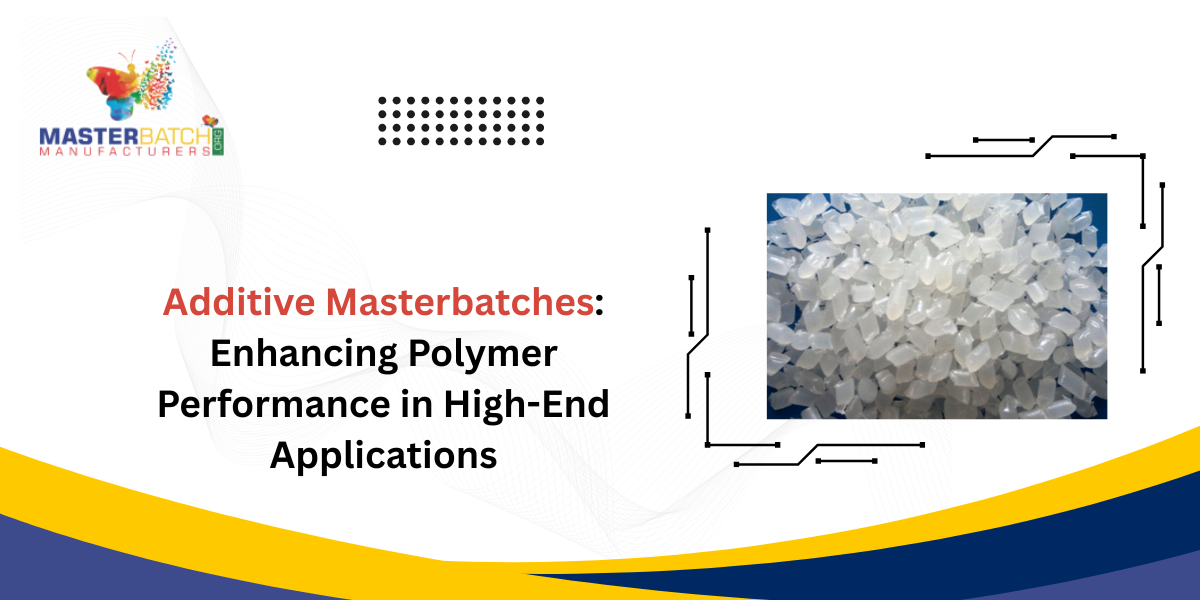

Plastics are not as simple as they look. A plain polymer, in most cases, cannot survive extreme heat, sunlight, pressure, or long-term wear. That is why manufacturers rarely use raw resin alone. They modify it. They improve it. They strengthen it. This is where Additive Masterbatches quietly do the heavy lifting. In high-end industries, materials are expected to perform without failure. Automotive dashboards cannot crack under heat. Medical components cannot degrade quickly. Electrical housings cannot catch fire easily. So instead of redesigning the entire polymer, manufacturers use Additive Masterbatches to fine-tune performance.
Understanding Additive Masterbatches in Simple Terms
Additive Masterbatches are concentrated blends of performance-enhancing additives packed inside a carrier resin. These blends are mixed with base polymers during processing.
Think of them as performance boosters. You add a small percentage, and the entire material behaves differently. Because Additive Masterbatch is pre-dispersed, they mix more evenly. That uniform distribution improves reliability in the final product.
Why High-End Applications Depend on Additive Masterbatches
Premium industries operate under strict standards. Materials must pass mechanical, thermal, and safety tests. Even minor weaknesses can cause major losses.
Additive Masterbatch assist polymers in resisting:
- UV radiation exposure
- High processing temperatures
- Mechanical stress
- Flame exposure
- Oxidation damage
If Additive Masterbatch is not used, most products made from polymers would not last as long.
Performance Enhancements That Truly Matter
The purpose of Additive Masterbatches is not for show. They affect the performance of the material in a direct manner.
Enhanced Durability
UV stabilizers in Additive Masterbatches protect the polymer from the damaging effects of sunlight. This increases the lifespan of outdoor components and preserves their color.
Enhanced Thermal Stability
Some Additive Masterbatches protect polymers from the effects of high-temperature processing. This is especially true for polymers that are prone to degradation under heat.
Enhanced Safety
Flame retardant Additive Masterbatches delay the onset of combustion. This is especially important in industries such as construction and electronics.
Static Control
Anti-static Additive Masterbatches protect against dust attraction and electric discharge. This is especially important in the packaging of electronic components.
Processing Benefits for Manufacturers
Apart from performance upgrades, Additive Masterbatches simplify production.
- They reduce dust compared to loose additives
- They allow accurate dosing
- They maintain consistency from batch to batch
- They reduce machine wear
Manufacturers prefer Additive Masterbatch because they provide control. And control means fewer defects.
Industries Using Additive Masterbatches
The demand for Additive Masterbatch continues to grow because multiple sectors rely on enhanced polymers:
- Automotive interiors and exterior trims
- Medical device components
- Agricultural films
- Electrical insulation parts
- High-performance packaging
In each of these industries, reliability is non-negotiable.
Selecting the Right Additive Masterbatches
Not every formulation works for every polymer. Selection criteria include:
- Type of base resin
- Processing temperature
- End-use environment
- Compliance with regulations
For instance, medical applications demand specially tested Additive Masterbatch. Automotive parts can emphasize heat and UV stability.
The Rising Need for Smarter Formulations
Sustainability is currently influencing the plastics sector. Companies are looking for answers that enhance performance without damaging recyclability.
Therefore, technical evaluation always comes before final selection.
New Additive Masterbatches are being developed to enable:
- Extended product life
- Less material usage
- Improved energy efficiency
- Compatibility with recycled materials
Innovation in Additive Masterbatch is not slowing down. It is evolving alongside industry needs.
Why is Additive Masterbatch Remain Essential
Replacing an entire polymer system is expensive and complex. Modifying it with Additive Masterbatches is practical and cost-effective.
- They provide flexibility.
- They improve strength.
- They enhance safety.
- They extend product lifespan.
For high-end applications, Additive Masterbatch is not an optional enhancement. They are performance tools.
Conclusion
Polymers used in advanced industries must do more than just exist. They must resist heat, handle stress, survive sunlight, and meet safety regulations. Additive Masterbatches make that possible. By carefully adjusting material properties, they turn standard plastics into high-performance materials.
As industrial demands continue to rise, Additive Masterbatch will remain a core part of polymer engineering.
FAQs
- What is Additive Masterbatch mainly used for?
They improve polymer properties like UV resistance, flame retardancy, and thermal stability.
- Do Additive Masterbatch affect product color?
Most performance-focused grades do not affect appearance significantly.
- Are Additive Masterbatch suitable for recycled plastics?
Yes, many modern formulations are compatible with recycled polymers.
- How much Additive Masterbatch is typically added?
Usually, a small percentage, depending on the required performance level.
- Can Additive Masterbatch improve product lifespan?
Yes. They protect polymers from environmental and thermal damage, increasing durability.
Follow us on Instagram for more updates and insights.