
Let’s be honest. Plastic on its own is not very smart. It melts, degrades, cracks, sticks, fades, and sometimes just refuses to behave on machines. What actually makes plastic usable in real life is what goes inside it. Additive Masterbatch in Plastics is where the silent but massive work happens.
It’s something that most people never mention but it’s there for manufacturers day in and day out.
This blog does not make things complicated and academic, it just goes easy and direct to the point. No textbook style, just real clarification.
What is an Additive Masterbatch in Plastics?
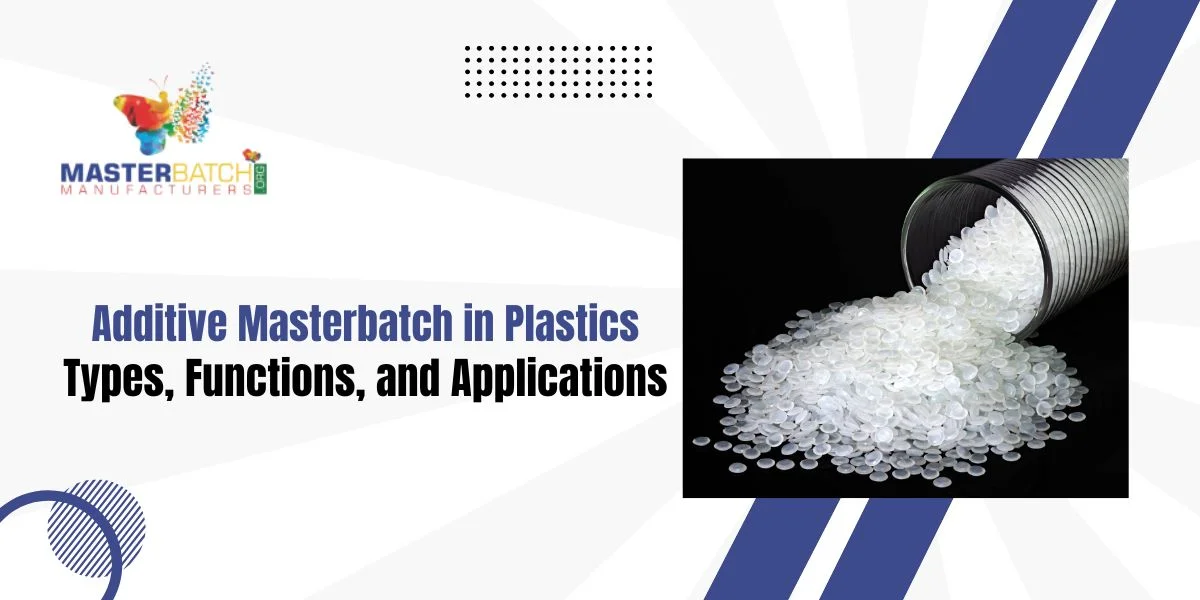
Compound Masterbatch in Plastics can be defined as a mixture of additives that has been mixed with a carrier of plastic which is ready to use in very simple terms. Instead of mixing the chemicals directly, the manufacturers opt for this masterbatch as it is safer, cleaner, and more uniform.
Let’s be real. Nobody wants unstable production.
Additive masterbatch helps plastic:
- Process smoothly
- Handle heat without damage
- Survive sunlight and outdoor exposure
- Stay consistent from batch to batch
That’s why Additive Masterbatch in Plastics has become a standard part of plastic manufacturing.
Why Plastic Needs Additive Masterbatch?
Plastic products today are expected to do a lot. They face sunlight, heat, friction, storage pressure, and transport stress. Without additives, plastic starts failing early.
Using Additive Masterbatch in Plastics helps manufacturers:
- Avoid cracks and brittleness
- Reduce machine issues
- Improve product life
- Maintain quality over time
Frankly speaking, many production problems don’t come from machines. They come from missing or wrong additives.
Different Types of Additive Masterbatch in Plastics
Not all additives do the same job. Each type solves a specific problem.
UV Additive Masterbatch
This protects plastic from sunlight damage.
Used in:
- Outdoor products
- Agricultural films
- Water storage items
Anti-Block Additive Masterbatch
Plastic films love to stick together. This additive stops that.
Commonly used in:
- Packaging films
- Carry bags
Anti-Slip Additive Masterbatch
This controls surface grip.
Helpful when:
- Film needs controlled sliding
- Packaging must stack properly
Antioxidant Additive Masterbatch
High heat during processing can damage plastic. This additive protects it.
Used in:
- Injection molding
- Extrusion lines
Anti-Static Additive Masterbatch
Static electricity attracts dust and causes handling issues.
Common in:
- Electronic packaging
- Industrial plastic parts
All of these come under Compound Masterbatch in Plastics, each with a clear purpose.
What Additive Masterbatch in Plastics Actually Does?
Let’s keep this real.
Manufacturers use Additive Masterbatch in Plastics because it:
- Improves processing stability
- Reduces product rejection
- Protects plastic during use
- Improves surface quality
- Saves time on machines
By the way, smoother processing also means less stress on operators and equipment.
How Additive Masterbatch is Made?
No complicated explanation needed.
The process usually looks like this:
- The right additive is selected
- A compatible polymer carrier is chosen
- Everything is mixed evenly
- The mix is melted and compounded
- It is cooled and cut into granules
A good Compound Masterbatch in Plastics mixes evenly and works quietly without causing side effects.
Where Additive Masterbatch in Plastics is Used?
Honestly, it’s everywhere.
You’ll find it in:
- Flexible packaging films
- Agricultural sheets and mulch films
- Automotive plastic components
- Household plastic products
- Electrical and electronic housings
- Medical and hygiene items
Without Additive Masterbatches in Plastics, many of these products wouldn’t survive real usage.
Benefits Manufacturers Actually Care About
Let’s be honest again. Practical benefits matter more than theory.
Using Additive Masterbatch in Plastics helps manufacturers get:
- Consistent product quality
- Fewer machine stoppages
- Better output speed
- Lower wastage
- Happier customers
In real factories, this directly affects profit.
How to Choose the Right Additive Masterbatch?
This step matters more than people think.
Before selecting Additive Masterbatch in Plastics, always consider:
- Final application
- Processing temperature
- Exposure to heat or sunlight
- Polymer compatibility
- Supplier support
Frankly, using the wrong additive can create new issues instead of fixing old ones.
Common Mistakes to Avoid
These mistakes are very common.
Avoid:
- Adding too much additive
- Mixing random additives together
- Buying only based on price
- Skipping trial testing
Smart use of Additive Masterbatch in Plastics always starts with testing.
Why Additive Masterbatch is Not an Extra Cost?
In real life, additive masterbatch is protection.
It helps manufacturers:
- Reduce complaints
- Maintain long-term quality
- Improve production efficiency
- Meet market expectations
This is exactly the reason why Additive Masterbatch in Plastics is regarded as a long-term investment.
Concluding Remarks
Indeed, Additive Masterbatch in Plastics is not a novelty but it is a magic wand that governs the plastic wise, active, and long-lasting properties. It works quietly in the background while the final product takes the spotlight.
Let’s be honest. Modern plastic manufacturing simply doesn’t work without it.
Follow us on Instagram for more updates and insights.
FAQs
1.What is the main purpose of Additive Masterbatch in Plastics?
To improve processing, durability, and product stability.
2. Can different additive masterbatches be used together?
Yes, but only after compatibility testing.
3. Is Additive Masterbatch in Plastics safe for food packaging?
Only certified food-grade additives should be used.
4. How much additive masterbatch is normally added?
Usually between 0.5% and 5%.
5. Does additive masterbatch affect plastic color?
Most additives work without changing color.