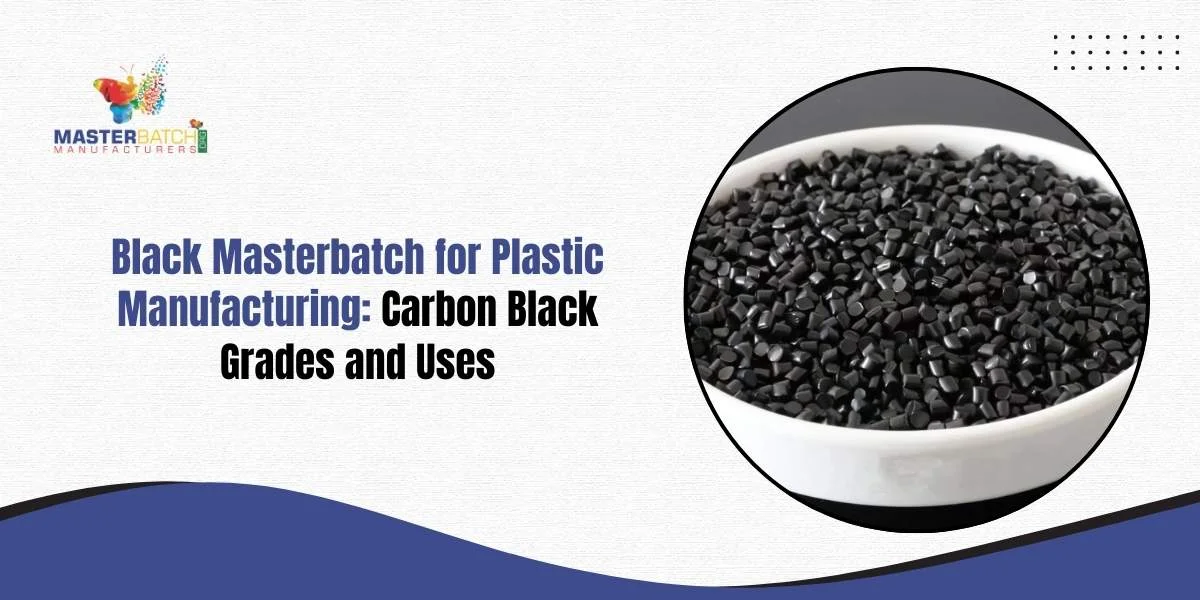

Let’s be honest. When it comes to plastic products, color matters more than people admit. A deep, rich black finish instantly makes a product look strong, premium, and reliable. And that’s exactly where Black Masterbatch for Plastic Manufacturing comes into the picture.
This blog is written in a super chill way. No heavy technical drama. Just clear, useful info that you can actually understand and enjoy reading.
So let’s start.
What is Black Masterbatch for Plastic Manufacturing?
Simply put, Black Masterbatch for Plastic Manufacturing is a solid additive used to color plastic products black. It is made by mixing carbon black pigment with a polymer carrier and some additives.
But let’s be real. It’s not just about color.
This masterbatch also improves:
- UV protection
- Strength and durability
- Heat resistance
- Overall product life
In fact, many manufacturers choose Black Masterbatch for Plastic Manufacturing not only for looks, but also for performance.
Why Carbon Black is So Important?
Carbon black is the hero ingredient here. And frankly, not all carbon blacks are the same.
High-quality carbon black offers:
- Deep black shade
- Excellent dispersion
- Better UV resistance
- Smooth surface finish
That’s why choosing the right carbon black grade is critical in Black Masterbatches for Plastic Manufacturing.
Manufacturing Process Explained in Simple Words
No worries. We’ll keep this easy.
The basic process of making Black Masterbatch for Plastic Manufacturing looks like this:
- Carbon black is selected based on required shade
- Polymer carrier like PE or PP is chosen
- Materials are mixed evenly
- The mixture is melted and compounded
- Strands are cooled and cut into granules
That’s it. The magic lies in formulation and quality control.
Carbon Black Grades Used in Black Masterbatch
Now let’s talk grades. This part is super important for buyers.
Manufacturers use different grades of carbon black in Black Masterbatches for plastic manufacturing depending on the application.
Common Carbon Black Grades Include:
High Jetness Grade: Used for deep black and premium products
Medium Jetness Grade: Suitable for general-purpose plastic items
Low Jetness Grade: Used where cost matters more than shade
UV Stabilized Grade: Perfect for outdoor applications
Choosing the right grade ensures the product performs well and looks good.
Applications of Black Masterbatch for Plastic Manufacturing
Honestly, this material is everywhere.
Some common uses include:
- Plastic pipes and fittings
- Agricultural films and sheets
- Automotive plastic parts
- Electrical cables and wires
- Blow molded containers
- Injection molded products
- Household plastic items
In fact, many outdoor plastic products rely heavily on Black Masterbatches for Plastic Manufacturing for UV protection.
Benefits of Using Black Masterbatch for Plastic Manufacturing
Let’s be honest again. Nobody wants uneven color or weak plastic.
Here’s why manufacturers trust Black Masterbatch for Plastic Manufacturing:
- Strong and uniform black color
- Excellent UV resistance
- Longer product life
- Easy processing
- Reduced rejection rates
By the way, good quality masterbatch can also reduce raw material wastage.
How to Choose the Right Black Masterbatch Supplier?
Now this part is for buyers. And yes, it matters a lot.
Before buying Black Masterbatches for Plastic Manufacturing, check these points:
- Consistent batch quality
- Carbon black dispersion quality
- Compatibility with base polymer
- Technical support availability
- Customization options
Frankly speaking, a reliable supplier focuses on performance, not just pricing.
Common Mistakes Buyers Should Avoid
Let’s be real. These mistakes happen way too often.
Avoid:
- Choosing only based on low cost
- Ignoring dispersion quality
- Not testing before bulk purchase
- Using the wrong grade for application
A poor-quality Black Masterbatch for Plastic Manufacturing can ruin the final product and increase complaints.
How Black Masterbatch Improves Product Performance?
This is something many people overlook.
Apart from color, Black Masterbatches for Plastic Manufacturing helps with:
- UV stability for outdoor use
- Heat resistance during processing
- Mechanical strength
- Surface smoothness
To sum it all up, it does more than what you think.
Conclusion
Thus, Black Masterbatch for Plastic Manufacturing turns out to be more than just a coloring agent. It’s a performance enhancer, a quality improvement and honestly, if selected right, a business saver.
Yo, plastic manufacturer, trader, or buyer, it’s all about understanding the carbon black grades and applications to make the right decisions. And be real, the right decisions are always the ones that reward you.
Follow us on Instagram for the latest insights, and innovations in plastic manufacturing.
Questions
1. Which pigment is mainly used in black masterbatch?
The main pigment used is carbon black.
2. Is Black Masterbatch for Plastic Manufacturing intended for outdoor applications?
Yes, especially UV-stabilized grades.
3. How much black masterbatch is added to plastic?
Usually between 1% to 3%, depending on requirement.
4. Can black masterbatch affect plastic strength?
Good quality masterbatch actually improves durability.
5. Can Black Masterbatches for Plastic Manufacturing be customized?
Yes, manufacturers can customize shade and performance.