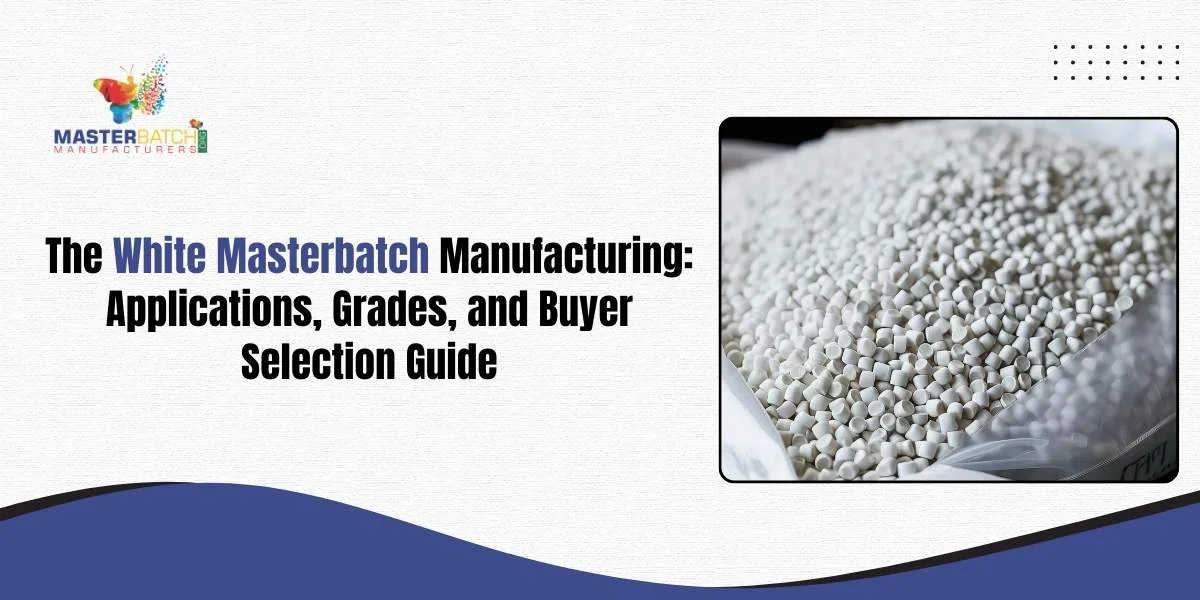

Let’s be honest for a minute. If you deal with plastic products, then you must have heard of the White Masterbatch for sure. Actually, it is the one doing the dirty work silently but effectively in making plastic products to have a clean, bright, and premium appearance. The usage of this material is done from packaging to household items; in fact, it is everywhere.
Thus, let us today, demystify it in a cool, relaxed, and engaging manner. No more very technical terms. Simply plain info that is of real benefit.
What is the White Masterbatch?
In a nutshell, the White Masterbatches is composed of high class titanium dioxide (TiO₂), polymers and additives. By this, the manufacturers can give a plastic a very strong and white color along with a smooth finish by immersing it during the processing.
By the way, it does more than just color.
It also helps with:
- Brightness
- Opacity
- UV resistance
- Product consistency
That’s why White Masterbatch is such a big deal in plastic manufacturing.
Why The White Masterbatch Matters in Manufacturing?
Let’s be honest. No brand wants dull or yellowish plastic products. Customers notice color instantly.
This is where White Masterbatch steps in and saves the day.
It helps manufacturers:
- Achieve uniform white color
- Improve product appearance
- Maintain batch-to-batch consistency
- Reduce production defects
In fact, good quality White Masterbatches can even reduce overall production cost by improving output quality.
The White Masterbatch Manufacturing Process (Simple Explanation)
Now don’t worry. We’ll keep this super easy.
Here’s how White Masterbatch is usually made:
- Titanium dioxide is selected based on required brightness
- Polymer carrier is chosen (like PE or PP)
- Ingredients are mixed properly
- The mixture is melted and compounded
- Strands are cooled and cut into granules
That’s it. No rocket science. Just smart processing and quality control.
Applications of The White Masterbatch
Many industries rely on White Masterbatches, and the number may surprise you.
Some common applications include:
- Plastic packaging films
- Injection molded products
- Blow molded containers
- Pipes and fittings
- Household plastic items
- Medical and hygiene products
- Automotive plastic parts
Frankly speaking, if it’s white plastic, White Masterbatch is probably involved.
Different Grades of The White Masterbatch
Not all white masterbatches are the same. And this is important.
Manufacturers produce different grades of White Masterbatch based on usage.
Common Grades Include:
High Opacity Grade: Used for thick products and premium packaging
Standard Grade: Suitable for daily-use plastic items
Film Grade: Perfect for thin films and carry bags
Injection Molding Grade: Designed for smooth finish and flow
Choosing the right White Masterbatches grade makes a huge difference in final output.
How to Choose the Right White Masterbatch Supplier?
Now let’s talk about the buyer side. This part really matters. Before buying White Masterbatches, don’t just look at the price. Look at the value.
Here’s what you should check:
- Consistent quality across batches
- Proper TiO₂ percentage
- Good dispersion in plastic
- Technical support from supplier
- Custom grade availability
In fact, a reliable White Masterbatch manufacturer will always help you select the right grade instead of pushing random products.
Key Factors Buyers Should Never Ignore
Let’s be honest again. Cutting corners here can cost you later.
Always pay attention to:
- Brightness level
- Opacity strength
- Heat resistance
- Compatibility with base polymer
- Long-term performance
A well-made White Masterbatch improves product life and customer satisfaction.
Benefits of Using High-Quality White Masterbatch
Still wondering if premium quality is worth it? Let’s clear that doubt.
Using good White Masterbatch offers:
- Better product finish
- Less wastage
- Smooth processing
- Stable color output
- Higher customer trust
In the end, quality is the only thing that matters.
Final Thoughts
To summarize, White Masterbatch may not be the biggest ingredient in the batch, but it certainly is one of the most important in plastic production. The right one to use dictates the whole range of things, from the outside look to functionality.
Knowing about the White Masterbatch will help you to make wiser choices, regardless of your role as a manufacturer, trader, or buyer. And this is eventually what gives companies a competitive advantage.
Follow us on Facebook for the latest updates, insights, and industry news.
FAQs
1. What raw material predominates in White Masterbatches?
Titanium dioxide is the primary element. It imparts high reflectance and low transparency.
2. Can White Masterbatch be customized?
Yes, many manufacturers offer custom grades based on application needs.
3. Is White Masterbatch safe for food packaging?
Yes, food-grade White Masterbatches are available and widely used.
4. How much White Masterbatches are used in plastic?
Usually between 1% to 5%, depending on product and grade.
5. Does White Masterbatch affect plastic strength?
No, good quality White Masterbatches maintains or even improves product performance.