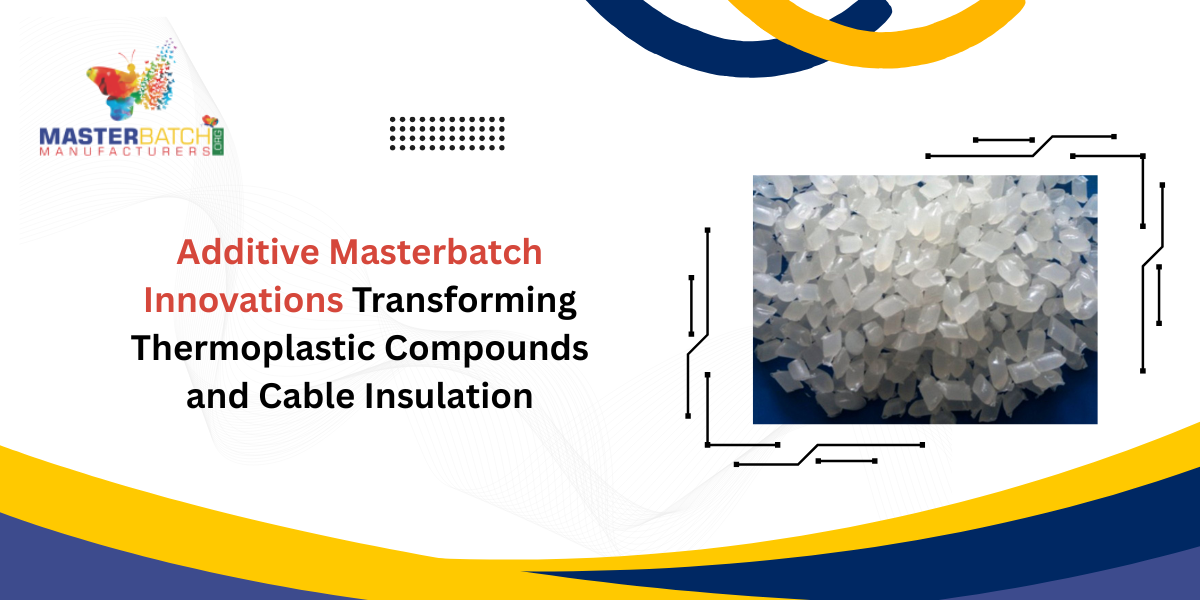

Additive Masterbatch Innovations are quietly rewriting the rules for plastic manufacturing. Factories no longer settle for basic polymer blends. They use concentrated additive formulas built to fix one specific problem at a time, whether that’s fire resistance in a cable or flexibility in a moulded part. This shift shows up everywhere, from cable insulation lines to automotive component plants, and Additive Masterbatch Innovations sit right at the centre of it.
So why the sudden push? Plastic products are being asked to do more than they used to. Cables have to survive heat and damp conditions for years without breaking down. Compounds need to bend under stress without cracking. None of that happens by accident. It happens because someone got the additive formula right.
What Are Additive Masterbatch Innovations?
Additive Masterbatch Innovations are concentrated additive blends made to boost one or more properties in a plastic compound. Think of them as a carrier resin loaded with pigments, stabilizers, flame retardants, or UV protectors, ready to be dropped into a production batch.
Workers mix these masterbatches straight into base polymers during processing. What comes out the other end has better colour consistency, holds up stronger under mechanical stress, and resists weather and chemical exposure far longer than older formulas managed.
A few things separate the newer blends from the old ones:
- They pack a higher additive concentration, so less material gets used per batch
- Dispersion inside the polymer matrix is noticeably cleaner
- Processing temperatures drop during compounding
- They work better with recycled plastic feedstock than older formulas ever did
How Do Additive Masterbatch Innovations Improve Thermoplastic Compounds?
Additive Masterbatch Innovations improve thermoplastic compounds mostly through tensile strength, flexibility, and how well the material holds up under heat. Why? Because the additives spread evenly through the polymer instead of bunching up in one corner of the batch.
Automotive parts, packaging, and construction materials all live or die on consistent compound quality. Uneven dispersion is usually the culprit behind weak spots, and weak spots are usually the reason a product fails on the factory floor.
Here’s where the newer technology actually earns its keep:
- Dispersing agents have gotten better at spreading additives uniformly
- Finer additive particles reach deeper into the polymer structure than before
- Formulas can now be tailored to the exact job the compound is meant to do
A lighter compound that doesn’t lose strength isn’t a small achievement. For manufacturers watching both cost and durability, it’s the whole point.
Why Are Additive Masterbatch Innovations Important for Cable Insulation?
Additive Masterbatch Innovations matter for cable insulation because they touch three things directly: fire resistance, electrical stability, and how long the cable lasts before it needs replacing. Cables running through buildings, vehicles, and industrial plants have to clear strict safety codes long before they’re ever installed.
A fire that traces back to faulty insulation isn’t a minor incident. It can shut a facility down. In worse cases, it puts people at risk. That’s the exact reason flame-retardant masterbatches carry so much weight in this line of work.
What these formulas usually bring to the table:
- Halogen-free flame retardant chemistry
- Stronger resistance to moisture and harsh chemicals
- Better protection when electrical faults occur
- A longer working life even under constant heat exposure
Cable manufacturers based in Rajasthan’s industrial belt, along with several other regional hubs, have been adopting these formulas steadily, mostly to keep pace with national wiring standards.
What Types of Additive Masterbatch Innovations Are Available?
Several types of additive masterbatches exist, and each one is built to fix a different problem on the line. Which one you need really comes down to what the finished product has to survive.
The categories that show up most often:
- UV stabilizer masterbatches, meant for anything used outdoors
- Flame retardant masterbatches, common in cables and electronics
- Anti-static masterbatches, used across packaging films
- Colour masterbatches, built for sharper and more consistent pigment dispersion
- Filler masterbatches, which help keep material costs in check
Most manufacturers don’t stick to just one category. They combine two or three inside a single compound, depending on what the application demands.
How Do Additive Masterbatch Innovations Compare Across Applications?
Additive Masterbatch Innovations don’t behave the same way across every industry. What keeps a cable from catching fire has almost nothing to do with what a packaging film needs. The table below lays out the differences plainly.
|
Application |
Primary Additive Type |
Main Benefit |
|
Cable Insulation |
Flame Retardant Masterbatch |
Fire safety and heat resistance |
|
Automotive Parts |
UV Stabilizer Masterbatch |
Weather resistance |
|
Packaging Films |
Anti-static Masterbatch |
Reduced dust and static buildup |
|
Consumer Goods |
Colour Masterbatch |
Consistent, vibrant colour |
|
Construction Materials |
Filler Masterbatch |
Cost efficiency and strength |
Once it’s laid out like this, it’s easy to see why no manufacturer relies on a single, one-size-fits-all additive formula.
Which Industries Benefit Most from Additive Masterbatch Innovations?
Industries built around electrical safety, automotive performance, and packaging quality get the most out of Additive Masterbatch Innovations. These also happen to be the industries where a small material failure turns into a very expensive, sometimes dangerous, problem.
The sectors leaning on these formulas hardest right now:
- Electrical and cable manufacturing
- Automotive component production
- Packaging and consumer goods
- Construction and infrastructure
None of these companies are just chasing better numbers on a data sheet. They’re trying to cut defect rates and squeeze more life out of every product they ship.
How Can Manufacturers Choose the Right Additive Masterbatch Innovations?
Manufacturers should choose Additive Masterbatch Innovations by matching the formula to the end-use requirement, the processing setup on hand, and whatever regulatory standard the product has to meet. Skip this step, and you’re setting yourself up for a costly mistake down the line.
Before locking in a supplier, it’s worth checking a few things:
- Does the formula actually work with the existing polymer system?
- How much additive concentration does this specific application need?
- Does it meet the safety and export regulations for the target market?
- Can the supplier back their product with real technical support, not just a data sheet?
Working with an established supplier, such as the team at masterbatchmanufacturers.com, takes a lot of the guesswork out of this process.
Frequently Asked Questions
1. What is an additive masterbatch?
A concentrated additive mixture in a polymer carrier, used to improve specific plastic properties during manufacturing.
2. Why do cable manufacturers use flame retardant masterbatches?
They improve fire safety and help cables pass national electrical safety codes.
3. Do Additive Masterbatch Innovations increase production costs?
Some formulas raise upfront costs but cut material waste and extend product life, which lowers costs over time.
4. Can additive masterbatches work with recycled plastics?
Yes. Many current formulas are built specifically for strong compatibility with recycled polymer systems.
5. Which industry uses Additive Masterbatch Innovations the most?
The cable and electrical industry, mainly because of how strict its safety requirements are.
Follow us on Instagram for the latest additive masterbatch innovations, plastic manufacturing insights, and industry updates.