
Plastic on its own is fairly limited. It cracks under the sun, picks up static, and catches fire too easily – and that is where additive masterbatch steps in. It is a concentrate of functional additives blended into a carrier resin, built to fix problems like these without changing the base plastic recipe. Factories across India lean on it once a product has to survive outdoor use or rough handling.
Take a plastic crate maker based near Gujarat. Their outdoor crates kept turning brittle and snapping within months, courtesy of the regional heat working on untreated plastic. Once they switched to a UV-grade additive masterbatch, the same crates lasted three times as long.
What Is Additive Masterbatch?
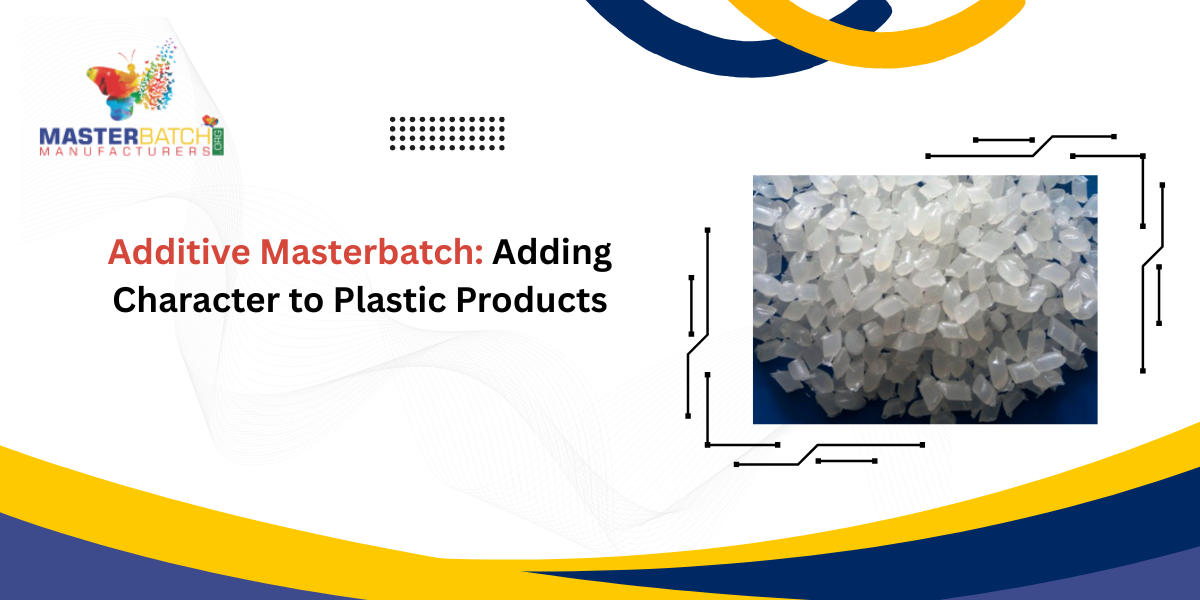
An additive masterbatch is simply a concentrated batch of functional additives, carried inside a resin base, dosed into plastic to give it a property it didn’t have before.
Think of it as a vitamin shot for plastic. A small amount changes how the final product behaves: better grip, less static cling, tougher resistance to sun damage. Manufacturers blend a small percentage of this concentrate into the base resin during molding or extrusion.
Unlike color masterbatch, it usually does not change how a product looks. What changes is how the product performs once it leaves the factory floor.
How Does Additive Masterbatch Work to Improve Plastic Products?
Additive masterbatch works the way seasoning works in cooking. A small, even dose changes the whole batch.
The carrier resin acts like a delivery vehicle. It carries the additive into every corner of the melted plastic during extrusion or injection molding. As the material cools, the additive locks into the structure itself, not coated on top and not sprayed over the surface.
That is why scratches, washing, or years of weathering cannot wipe it away the way a paint job eventually does.
What Are the Different Types of Additive Masterbatch?
Not every additive masterbatch does the same job. Pick the wrong type, and a factory ends up solving the wrong problem.
Common types include:
- UV Stabilizer Masterbatch – protects against sunlight and outdoor weathering
- Anti-static Masterbatch – cuts down static charge and dust pickup
- Anti-block and Slip Masterbatch – stops plastic films from sticking together
- Flame Retardant Masterbatch – slows down fire spread in plastic parts
- Anti-microbial Masterbatch – limits bacteria and fungus growth on surfaces
Most factories end up combining two or three of these in a single product, not relying on just one.
What Is the Difference Between Additive Masterbatch and Color Masterbatch?
Additive masterbatch and color masterbatch often get grouped together since both arrive as small plastic pellets. They are not solving the same problem, though.
|
Feature |
Additive Masterbatch |
Color Masterbatch |
|
Main Purpose |
Improves function and durability |
Adds color and visual appeal |
|
Effect on Appearance |
Usually invisible |
Clearly visible |
|
Common Use |
UV protection, anti-static, flame resistance |
Branding, packaging design |
|
Added During |
Extrusion or molding |
Extrusion or molding |
|
Typical Dosage |
Low to medium percentage |
Depends on shade strength |
Most production lines use both together: color masterbatch for branding, additive masterbatch for the part nobody notices but everybody depends on.
Where Is Additive Masterbatch Used Across Industries in India?
Across India, masterbatch shows up in industries that share little in common, except that all of them need plastic to survive.
Industries that depend on it include:
- Packaging – anti-static and anti-block properties for films and pouches
- Automotive – heat-resistant and flame-retardant parts
- Agriculture – UV-stable mulch films and irrigation pipes
- Construction – weather-resistant pipes and fittings
- Textiles – moisture control and anti-microbial fibers
Demand keeps climbing each year as plastic replaces metal and wood in more of these applications.
How Do You Choose the Right Additive Masterbatch Manufacturer in India?
Picking an additive masterbatch manufacturer is less about price and more about whether the supplier can repeat the same quality, batch after batch.
Keep these points in mind before selecting one:
- Check for proper quality certifications and test reports
- Ask about batch-to-batch consistency in additive concentration
- Look for manufacturers offering customised formulations
- Confirm technical support for dosage and compatibility questions
For application-specific solutions, browse Additive Masterbatches for UV stabilizer, anti-static, anti-block, flame-retardant, and antimicrobial grades.
Gujarat, especially around Ahmedabad, remains a major hub for this manufacturing in India. If sourcing on your own means a lot of cold-calling, platforms like Masterbatch Manufacturers (masterbatchmanufacturers.com) already vet suppliers and connect buyers directly.
Final Thoughts
Plastic rarely gets credit for surviving sunlight, static, or rough handling for years without falling apart. Additive masterbatch is usually the reason it does. Worth checking which type your products might be missing, or browsing suppliers like Masterbatch Manufacturers if sourcing is next.
What Do People Often Ask About Additive Masterbatch?
A few quick answers to what buyers usually ask before placing an order.
What is additive masterbatch used for?
Mainly to help plastic survive something it otherwise could not, such as sunlight, static, fire, or bacteria, depending on the type used.
Is it safe for food packaging?
Yes, food-grade additive masterbatch is made with FDA-approved ingredients meant for direct contact.
How much is added to plastic?
Usually, 1 to 5 percent of the total weight, depending on what the additive needs to do.
Can it be customised for a specific product?
Almost always. Most suppliers adjust the formulation once they know the exact use case.
Does it affect plastic recycling?
Not much. Most additive types stay recyclable along with the base plastic.
Follow us on Instagram for additive masterbatch updates, plastic processing tips, and the latest industry insights.